
Equity fundraising through initial public offerings (IPOs) rose 20 per cent during the financial year 2023-24 (FY24). During the period, 76 Indian corporates raised Rs 61,915 crore through main board IPOs, compared to Rs 52,116 crore mobilised by 37 IPOs in 2022-23, as disclosed by PRIME Database. However, if one excludes the mega Life Insurance Corporation (LIC) IPO, which came out in 2022-23, IPO mobilisation increased by 58 per cent from last year.
Fundraising via the initial public offering (IPO) route by companies may touch Rs 1 trillion in financial year 2024-25 (FY25), according to a recent note by Pantomath Group - a mid-market investment bank. During the financial year 2023-24 (FY24), 76 companies tapped the markets through mainboard IPOs, Pantomath said, raising nearly Rs 62,862 crore. This is a 21 per cent rise compared to FY23, the note added.

Torrent Pharmaceuticals' Rs 3,000 crore proposal for increasing FII investment limit to 35 per cent was the biggest in terms of value

In May, price growth for drugs was in negative territory at (-)1 per cent

While the innovators see data protection as an essential step to spur R&D, generics deem it as ploy to ensure monopoly by yet another name.
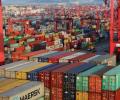
India recorded the highest monthly exports during the fiscal in February, registering an 11.9 per cent growth to $41.4 billion, mainly driven by increased shipments of engineering goods, electronic items and pharma products. The trade deficit during February worked out to $18.7 billion, up from $16.57 billion in the year-ago month, as gold imports surged significantly. Merchandise imports were valued at $60.11 billion, up 12.16 per cent compared to $53.58 per cent in February 2023.

'It is admitted that the AZ vaccine can, in very rare cases, cause TTS.'
China and India's advantages such as lower costs and greater market opportunity outweigh the higher risk compared with the more established and mature regulatory regimes of Australia, Japan and Singapore.
Encouraged by its 'record-setting' growth of 67 per cent in the domestic pharmaceutical market last year, pharmaceutical firm Mankind on Monday announced expansion plans into the South India formulations market.

In a major relaxation of foreign investment rules in the pharma sector, a special group set up under the finance ministry has suggested it could consider permitting up to 49 per cent FDI (foreign direct investment) in the automatic route for brownfield investments in case the company's control remained in Indian hands.
Ranbaxy's troubled plants in India could see a turnaround as Sun Pharma has experience in doing so.
While the chemicals ministry, which drafted the policy, is the administrative ministry for the pharma industry, quality regulation and marketing approvals come under the purview of the health ministry. Agriculture Minister Sharad Pawar, who heads the GoM, asked health and chemicals secretaries to sort out the issues and get back to the GoM at the earliest.

India emerging as a big global destination for contract manufacturing, unlike R&D outsourcing.
A Pharmaceutical company was on Sunday gutted in a fire in Samba district of Jammu and Kashmir.

Benchmark equity indices Sensex and Nifty settled with marginal gains on Thursday in a highly volatile trade amid the scheduled monthly derivatives expiry and muted trend in the US markets. The 30-share BSE Sensex closed 86.53 points or 0.13 per cent higher at 66,988.44, registering its third day of gains. During the day, it hit a high of 67,069.89 and a low of 66,610.35.

Among the Sensex firms, Bajaj Finance fell by nearly 3 per cent, the most among the 30 frontline companies. Bajaj Finserv, Axis Bank, HDFC Bank, Reliance Industries, NTPC, ICICI Bank and IndusInd Bank were the other major laggards. In contrast, Tata Motors, Sun Pharma, Maruti and Mahindra & Mahindra were the gainers.

The government on Tuesday said it is considering forming a venture capital fund of Rs 2,000 crore (Rs 20 billion) to promote research and development (R&D) in the pharmaceutical sector.
RIL is grappling with other priorities -- sliding oil prices, shrinking refining margins and a battle with the Anil Ambani group over the supply of gas. The plan was to build an integrated pharma company in two to three years, on the lines of large domestic majors such as Ranbaxy's or Dr Reddy's Laboratories. Instead, the plan has been modified to being a start-up bulk drug manufacturing company that will launch six bulk drugs or active pharmaceutical ingredients by 2010.
Swedish firm Astra Pharmaceutical will buy out the remaining less than 10 per cent stake in its local arm Astrazeneca Pharma India by next year following approval from the Foreign Investment Promotion Board.

South-east Asian countries are emerging as preferable destination for India's pharma companies to expand their business as they share similar patient population and disease profile and moreover, have a conducive environment for their operations like easy market approach without any regulatory uncertainty, the survey of Indian pharma firms highlighted.
Dr Reddy's Laboratories, Jubilant Organosys, Orchid Chemicals, Aurobindo Pharma and Shasun Chemicals and Drugs are among those who have borrowed either to expand locally or to acquire companies abroad, but are now struggling to repay the dues, analysts say. Some of the companies' debt now exceeds their market capitalisation, as local and global investors sold stocks on concerns over slowdown and falling revenues. A few drug makers may be forced to sell assets to repay debt.
Reduction in customs duty on certain bulk drugs used in making life saving drugs to 5% is a positive for companies having product pipeline catering to these segments.

Among the Sensex firms, IndusInd Bank, Tata Steel, Tata Motors, Sun Pharma, Infosys, Mahindra & Mahindra, Infosys, NTPC, Bharti Airtel, HCL Technologies and Axis Bank were the biggest gainers. Tech Mahindra and Bajaj Finance were the laggards.
The Promed group manufactures and delivers branded as well as generic pharmaceutical formulations to Russia, CIS, south-east Asian countries, the UK and EU.
According to Amitabh Arora, chief representative, Think London, "The agency will help Indian companies enter business agreements with 100-odd biotech and pharma companies and about 50 contract research organisations based in London besides arranging private equity from London-based PE firms.
Looking at the behavior of the Indian stock markets in the last one month, one gets a feeling that it has again proved to be the proverbial conundrum, something extremely difficult to predict in the short term.

Revenues and earnings to improve for companies with low forex liabilities and no forward cover.

Reddy, who was an accused in a money-laundering case linked to the alleged liquor scam in Delhi, had turned an approver in the case that is being probed by the Enforcement Directorate (ED). The CBI is yet to file a chargesheet against him.

Indian pharmaceutical companies, which always wanted a big share in the global copycat drug market, are betting high on the oral contraceptive (OC) market in America.
Multinational drug manufacturers such as Pfizer and DSM are increasingly getting into contract manufacturing alliances with emerging bulk drug makers in the country, bypassing established players such as Ranbaxy and Dr Reddy's.

Operating margins have been the primary driver of corporate earnings in India in recent quarters, despite revenue growth suffering from weak consumer demand. Companies across sectors have reported a sharp improvement in earnings before interest, tax, depreciation, and amortisation (Ebitda) margins over the past two years, benefiting from lower commodity and energy prices. Higher margins more than compensated for slower revenue growth, resulting in double-digit growth in net profit for five consecutive quarters.
From the Sensex pack, Bharti Airtel, HDFC Bank, Titan, ITC, UltraTech Cement, Sun Pharma, Bajaj Finserv, Bajaj Finance, Hindustan Unilever and Kotak Mahindra Bank were among the major gainers. Tata Steel, Axis Bank, IndusInd Bank, NTPC and ICICI Bank were the major laggards.

Acquisition to boost its generics business in developed markets.

Dinesh Thakur is famous for exposing Ranbaxy safety problems

Post Ranbaxy episode, domestic pharma companies may face frequent inspections and deeper scrutiny.
Indian IT service providers are increasing their exposure in the healthcare and pharma segments. Multi-million dollar deals in this space by IT firms over the past three-four months only buttress this trend. Healthcare outsourcing has moved away from just undertaking medical transcription and business process outsourcing (BPO) work to core functions such as drug discovery, testing, research and development.

Industry must take strong collective action to protect the reputation it enjoys in global markets, says Kiran Mazumdar Shaw.
